


What is the unmet need?
Despite advances, most patients with mHSPC will progress to castration resistance.4
Median survival of a patient with metastatic castration-resistant prostate cancer (mCRPC) cancer (mCRPC) today is 2–3 years.5,6
Why biomarker-driven approaches?
- Disease progression may be related to biomarker-driven mechanisms of resistance2,3
- Biomarkers are a guideline-recommended tool to inform7–9:
- Understanding of metastatic prostate cancer prognosis and progression risk
- Personalized treatment selection


What is PTEN?
PTEN is a key tumor suppressor protein
that modulates the PI3K/AKT pathway.3
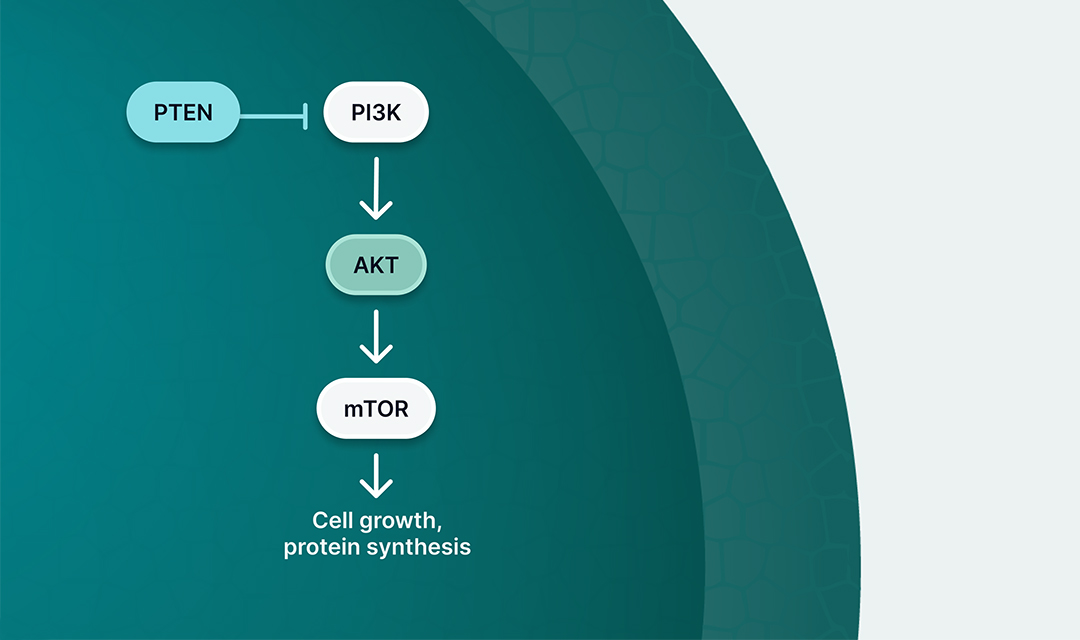

Why does PTEN matter in metastatic prostate cancer?

PTEN deficiency occurs in approximately 25% of mHSPC tumors2


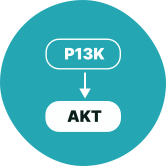
This leads to PI3K/AKT pathway overactivation, a critical path to disease progression and castration resistance2,3,10
What is the clinical relevance of PTEN deficiency?
PTEN deficiency is a prognostic biomarker associated with2,3:
- More aggressive mHSPC
- Worse prognosis


Knowing the PTEN status of a patient's tumor can inform treatment strategies that could potentially delay progression to mCRPC and improve survival outcomes.2
How do I test for PTEN deficiency?
Routine testing for PTEN status can be incorporated into the standard-of-care work-up of patients with mHSPC using standard laboratory techniques, including3:
- Immunohistochemistry (IHC)
- Next-generation sequencing (NGS)
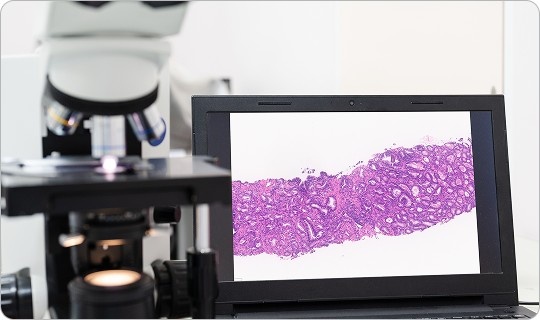
This platform recognizes the real-world challenges of implementing tissue-based biomarker testing in pathology and provides practical tools to support this testing at diagnosis in prostate cancer.

Uncover deeper insights
Explore unmet needAKT, protein kinase B; IHC, immunohistochemistry; mCRPC, metastatic castration-resistant prostate cancer; mHSPC, metastatic hormone-sensitive prostate cancer; NGS, next-generation sequencing; PI3K, phosphoinositide 3-kinase; PTEN, phosphatase and tensin homolog.
1. Pulido R, et al. Cold Spring Harb Perspect Med. 2019;9(12):a036293; 2. Zhang JY, et al. Asian J Androl. 2022;24(1):50–55; 3. Turnham DJ, et al. Cells. 2020;9(11):2342; 4. Ng K, et al. Oncol Ther. 2020;8(2):209–230; 5. Freedland SJ, et al. Prostate Cancer Prostatic Dis. 2024;27(2):327–333; 6. Moreira DM, et al. Clin Genitourin Cancer. 2017;15(1):60–66; 7. Referenced with permission from the NCCN Clinical Practice Guidelines in Oncology (NCCN Guidelines®) for Prostate Cancer V.2.2026. © National Comprehensive Cancer Network, Inc. 2026. All rights reserved. Accessed September 15, 2025. To view the most recent and complete version of the guideline, go online to NCCN.org. NCCN makes no warranties of any kind whatsoever regarding their content, use or application and disclaims any responsibility for their application or use in any way; 8. Yu EY, et al. J Clin Oncol. 2025;43(6):748–758; 9. Lowrance W, et al. J Urol. 2023;209(6):1082–1090; 10. Jamaspishvili T, et al. Nat Rev Urol. 2018;15(4):222–234.